
SAVANNAH CAT GUIDES
What Is a Savannah Cat? A Complete Introduction to the Breed
A Savannah cat is unlike almost any other domestic cat. Intelligent, athletic, curious and often deeply attached to the people it lives with, a Savannah combines a striking appearance with an equally distinctive personality.
But there is no single description that fits every Savannah. Behaviour, size and needs can vary considerably depending on generation, personality, upbringing and home environment. Living with a Savannah can be extraordinary, but it is also a commitment that should be understood before bringing one into your home.
At Pushkin the Savannah Cat, we explore the breed through both trusted information and real life. Understanding a breed requires more than repeating a list of characteristics. It also means observing how an individual cat communicates, forms relationships, develops routines and becomes part of everyday family life.
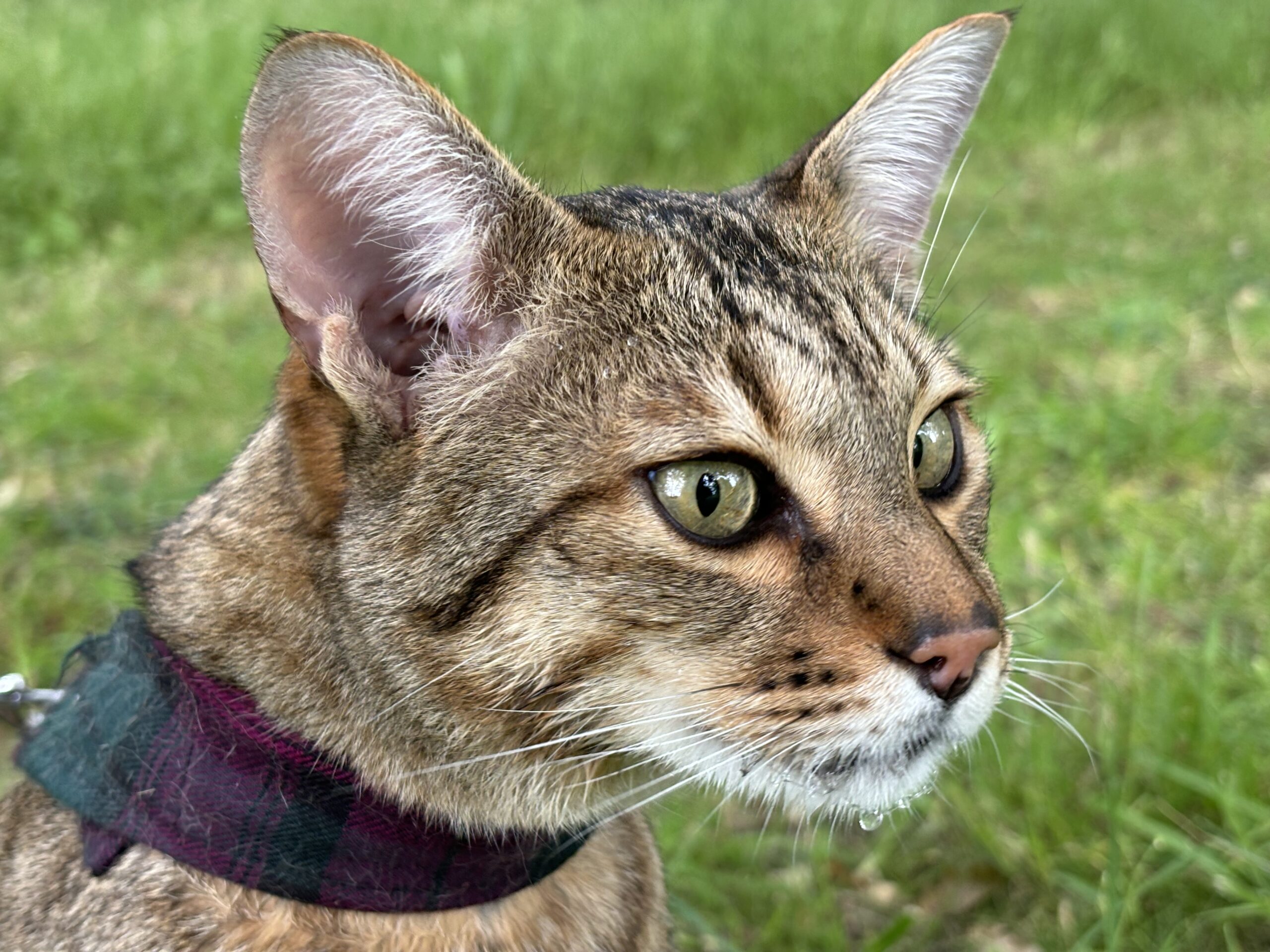
And at the heart of that story is Pushkin.
Understanding the Savannah Cat
The Savannah is a hybrid cat breed that originated from a cross between the African serval (Leptailurus serval) and a domestic cat.
The first documented Savannah was born in the United States in 1986. The breed was later developed through selective breeding, with subsequent generations bred increasingly within domestic cat lines.
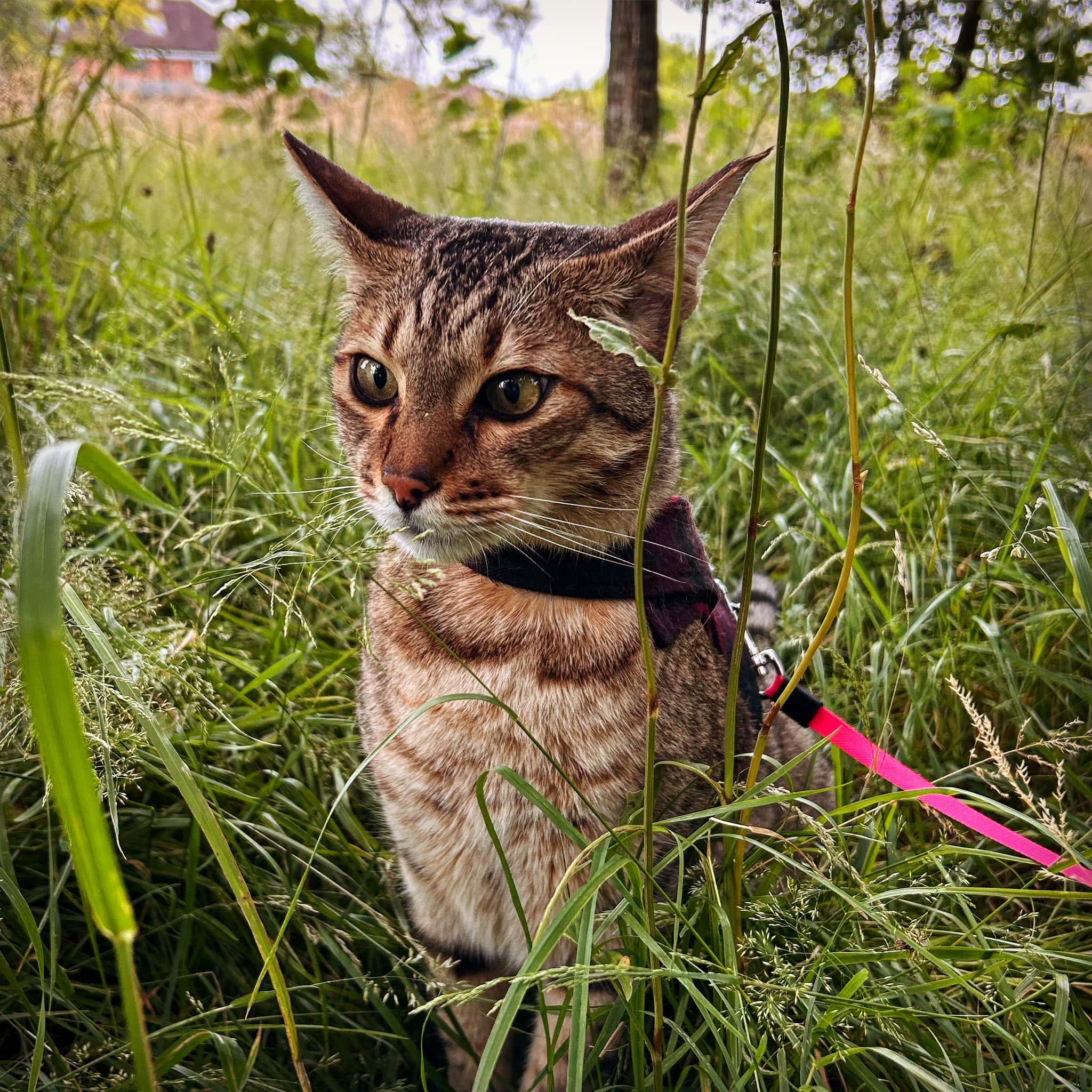
Today, Savannahs are known for their tall, elegant build, long legs, large high-set ears, boldly spotted coats, athletic ability and inquisitive nature. Their appearance catches your attention immediately.
For many people who live with one, however, it is the personality that leaves the deepest impression.
Understanding Savannah Generations
You will often see Savannahs described as F1, F2, F3, F4, F5 and beyond. The letter F refers to filial generation and describes a cat's generational relationship to its serval ancestry.
In simple terms, F1 means that the cat has a serval parent. F2 means that it has a serval grandparent. F3 is another generation removed, and later generations are progressively further from the original serval cross.
Generation alone does not tell you everything about an individual cat. Two Savannahs of the same generation can be very different. Genetics, breeding, socialisation, environment and individual character all help shape the cat you meet.
That is why we believe Savannahs should be understood as individuals, not simply as an F-number.
What Does a Savannah Cat Look Like?
The Savannah is immediately recognisable. It is typically tall and lean, with long legs, large ears, a relatively small head in proportion to the body and an athletic, graceful way of moving.
The overall impression can be strikingly wild. Yet later-generation Savannahs may live lives that are recognisably domestic: sleeping on beds, following their humans around the house and developing familiar daily routines.
Pushkin is a perfect example of this contrast. He looks extraordinary, but what makes him extraordinary to us has little to do with appearance. It is the way he communicates, the way he follows, the way he participates and the way he makes his wishes very clear.
What Is a Savannah Cat's Personality Like?
Savannah cats are often described as intelligent, curious, active and highly interactive. Those words are useful, but they can also be too general. Living with Pushkin has shown us that intelligence is not simply about opening doors or solving puzzles. It is also about communication, observation and participation.
Pushkin has something to say about almost everything. He greets us, asks for things and lets us know when he wants to go outside. He also makes it very clear when something is not happening quickly enough. If breakfast is late, subtle communication is not always his preferred approach; he has been known to give a gentle nip to make it clear that getting out of bed would be an excellent idea.
He is also deeply affectionate and remarkably gentle. He does not behave aggressively towards us, and hissing is not part of his normal way of communicating. His personality is expressive rather than confrontational.
For us, this is one of the most fascinating aspects of living with a Savannah: the feeling that you are not simply living alongside a cat, but developing an ongoing conversation with a highly observant individual.
Of course, Pushkin is one Savannah cat. His personality should not be treated as a guarantee of how every Savannah will behave. But his life gives us something valuable that a list of breed characteristics cannot: a real example of what living with a Savannah can actually feel like.
Are Savannah Cats Vocal?
Many Savannah owners describe their cats as communicative, although the amount and type of vocalisation vary between individuals. Pushkin is extremely verbal, and much of his communication appears to have a purpose.
There are greetings, requests, complaints, invitations and reminders, as well as what sometimes seems very much like a running commentary on events. Over time, we have learned to recognise many of these patterns and understand them in the context of his body language and daily routines.
This is an area we will explore in greater depth in Life with Pushkin. Understanding a cat's communication requires more than describing the sounds they make. It means observing the situation, the body language, the routine and the relationship between the cat and the people around them.
Do Savannah Cats Become Attached to Their People?
Savannahs are often described as forming strong bonds, and Pushkin certainly does. He likes to know where his principal human is and will often follow from room to room.
That does not mean he wants to be held or fussed over every moment. Like any cat, he has his own preferences and boundaries. But he wants to be involved. If something is happening, he considers it reasonable that he should know about it.
If someone moves to another part of the house, he may follow. If a door opens, he notices. If the routine changes, he notices that too.
That combination of independence and close involvement is what makes life with him so distinctive.
How Active Are Savannah Cats?
Savannahs are generally athletic and active. Before choosing one, the more helpful question is not simply, “Do I have enough space?” It is, “Can I provide enough opportunity for this cat to move, explore, think and participate?”
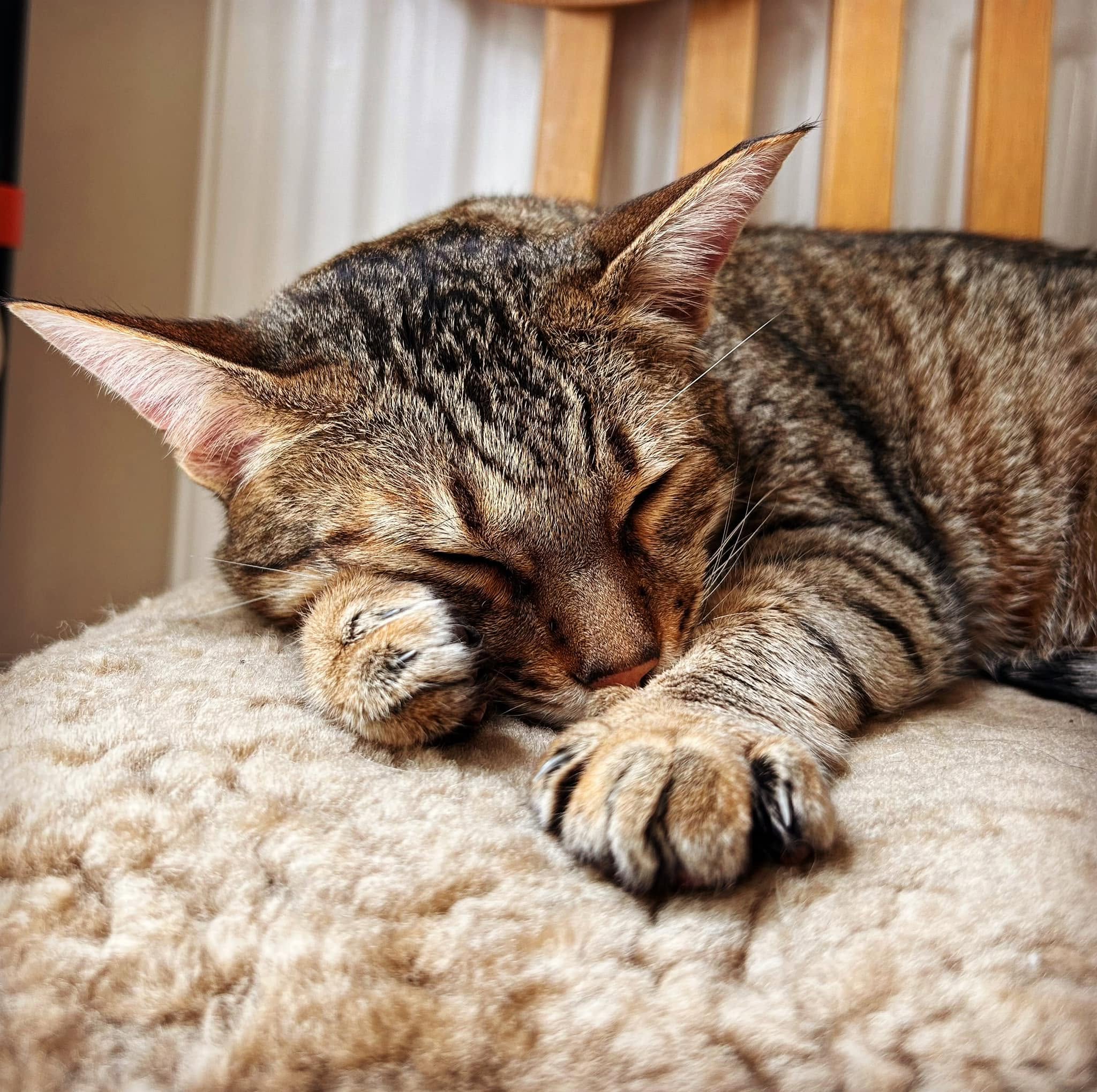
Pushkin has several ways to experience the world safely. He has round-the-clock access to a large, secure outdoor catio through his own cat flap, and he also goes outside on a harness and lead.
When he wants to explore, he lets us know. He sits on his stool in the hallway and announces his intentions. The harness itself is not a battle. It is simply part of the routine that allows him to experience more of the outside world safely.
Other Savannah cats and households may need different solutions. The principle matters more than any single setup: an intelligent, active cat needs a life that provides appropriate opportunities to use both body and mind.
Are Savannah Cats Good Family Pets?
There is no single responsible answer. The right match depends on the individual cat, its generation and pedigree, its early socialisation, the experience and expectations of the household, children or other animals in the home, the time available for interaction and the environment provided.
A Savannah should not be chosen for appearance alone. The breed can be deeply engaging and rewarding, but prospective owners should research carefully and speak with responsible, knowledgeable breeders and experienced Savannah owners.
Local laws and ownership requirements should also be checked before acquiring a Savannah, as regulations vary by country and jurisdiction and may differ according to generation.
Are Savannah Cats Difficult to Own?
A better word than difficult is often demanding. Not necessarily in a negative sense, but demanding of attention, understanding, time, consistency and involvement.
A Savannah may not suit someone looking for an independent pet that needs very little interaction.
Pushkin is part of daily life. He has routines, expectations and opinions, and he communicates them clearly.
For the right household, that involvement is precisely what makes living with a Savannah so rewarding. For the wrong household, it may feel overwhelming. That is why honest information matters.
What Makes Savannah Cats So Special?
There are many answers: appearance, athleticism, intelligence, curiosity and connection.
After living with Pushkin, our answer is simpler.
Presence.
Pushkin has presence. He does not merely occupy the house; he participates in it.
He greets, observes, follows, requests, waits and insists. And occasionally, he reminds us that breakfast should have happened several minutes ago.
That is why this website exists. Not to suggest that every Savannah is exactly like Pushkin, but to combine reliable information about this remarkable breed with the real life of one remarkable Savannah cat.
Meet the Real Pushkin
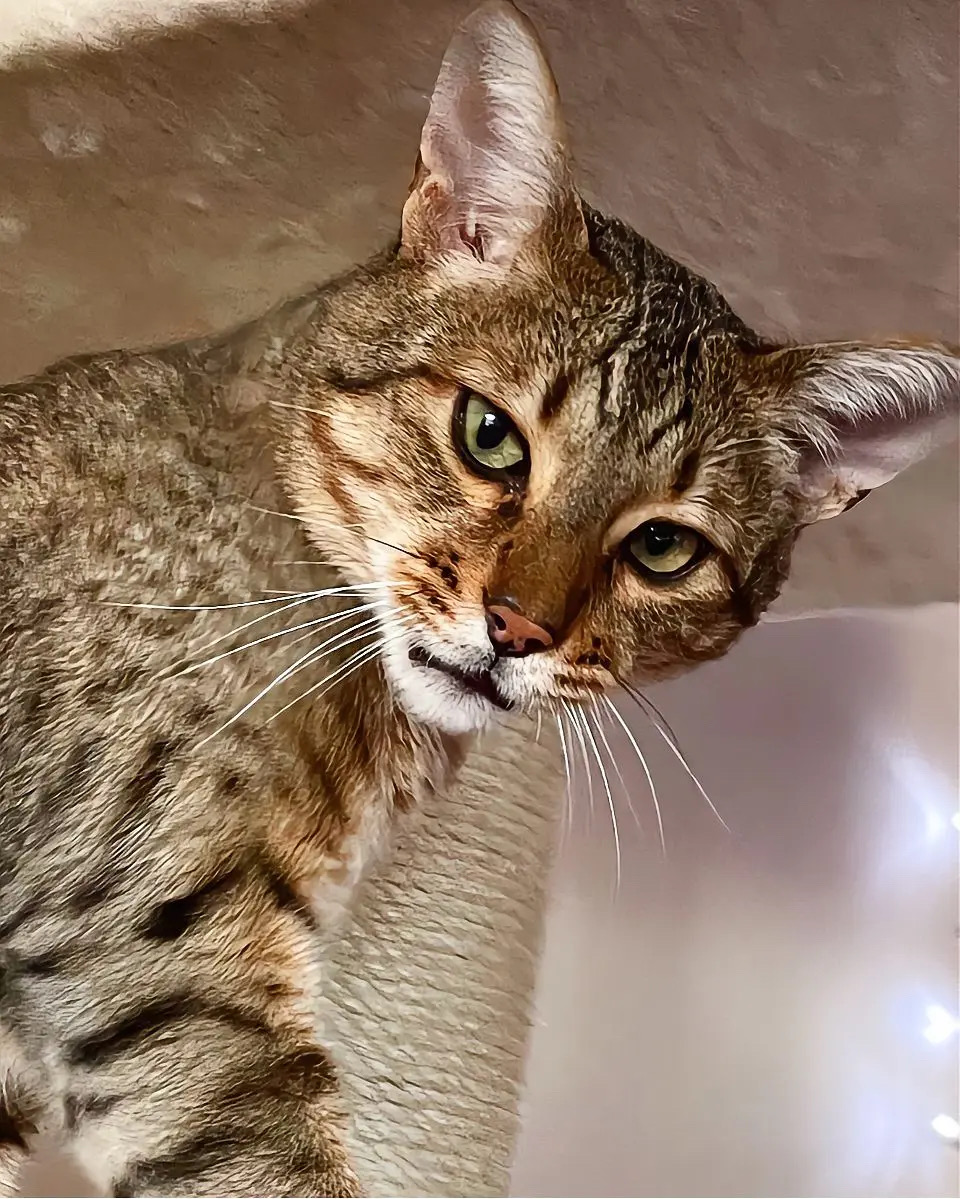
Pushkin is a Savannah cat with a large personality, a remarkable voice and a life that has already crossed borders. Today, he lives in Norway, where his days include family life, conversations, supervised outdoor adventures and unrestricted access to his large, secure catio.
His story is the foundation of this website. Through Savannah Cat Guides, we explore the breed. Through Life with Pushkin, we show what that life actually looks like. And through Stories & Music, Pushkin's world becomes a growing collection of stories, narration, music and creative work.
Welcome to Pushkin's world.