
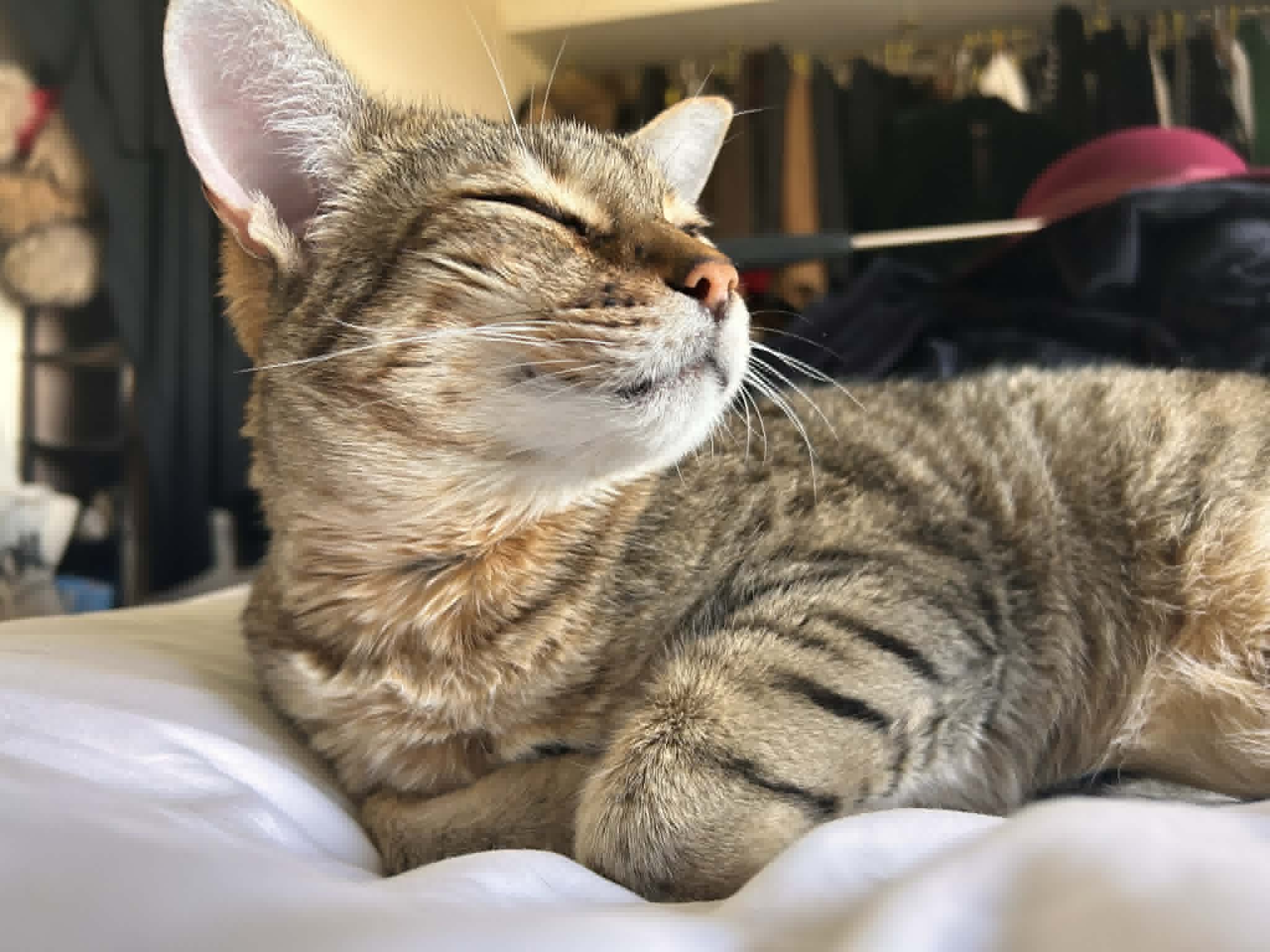
Everything you need to know about Savannah cats
Written from real, daily experience of raising an F-generation Savannah cat — not theory borrowed from elsewhere.
What Is a Savannah Cat? A Complete Introduction to the Breed
An introduction to the Savannah cat breed, including generations, appearance, personality, communication, activity and real-life experience with Pushkin.
What Is a Savannah Cat?
The Savannah cat is a hybrid breed — a cross between a domestic cat and the African Serval, a wild, long-legged hunter from sub-Saharan Africa. The first Savannah kitten was born in 1986, and the breed was officially recognised by The International Cat Association in 2001. Today, Savannah cats are found in homes from the United States and the United Kingdom to Norway, admired for their striking looks and their strangely dog-like loyalty.
Understanding Generations — F1 through F5
Every Savannah cat is classified by how closely related it is to its Serval ancestor. The lower the number, the wilder — and the more demanding — the cat.
- F1 — ~50% Serval. Rare, large, and often restricted by local licensing.
- F2 — ~25% Serval. Still striking, still demanding of an experienced owner.
- F3 — ~12.5% Serval. More settled, but still spectacular in appearance.
- F4 — ~6.25% Serval. Fully recognised as a domestic breed. Excellent family cats.
- F5 — ~3% Serval. The most domesticated generation, ideal for first-time owners.
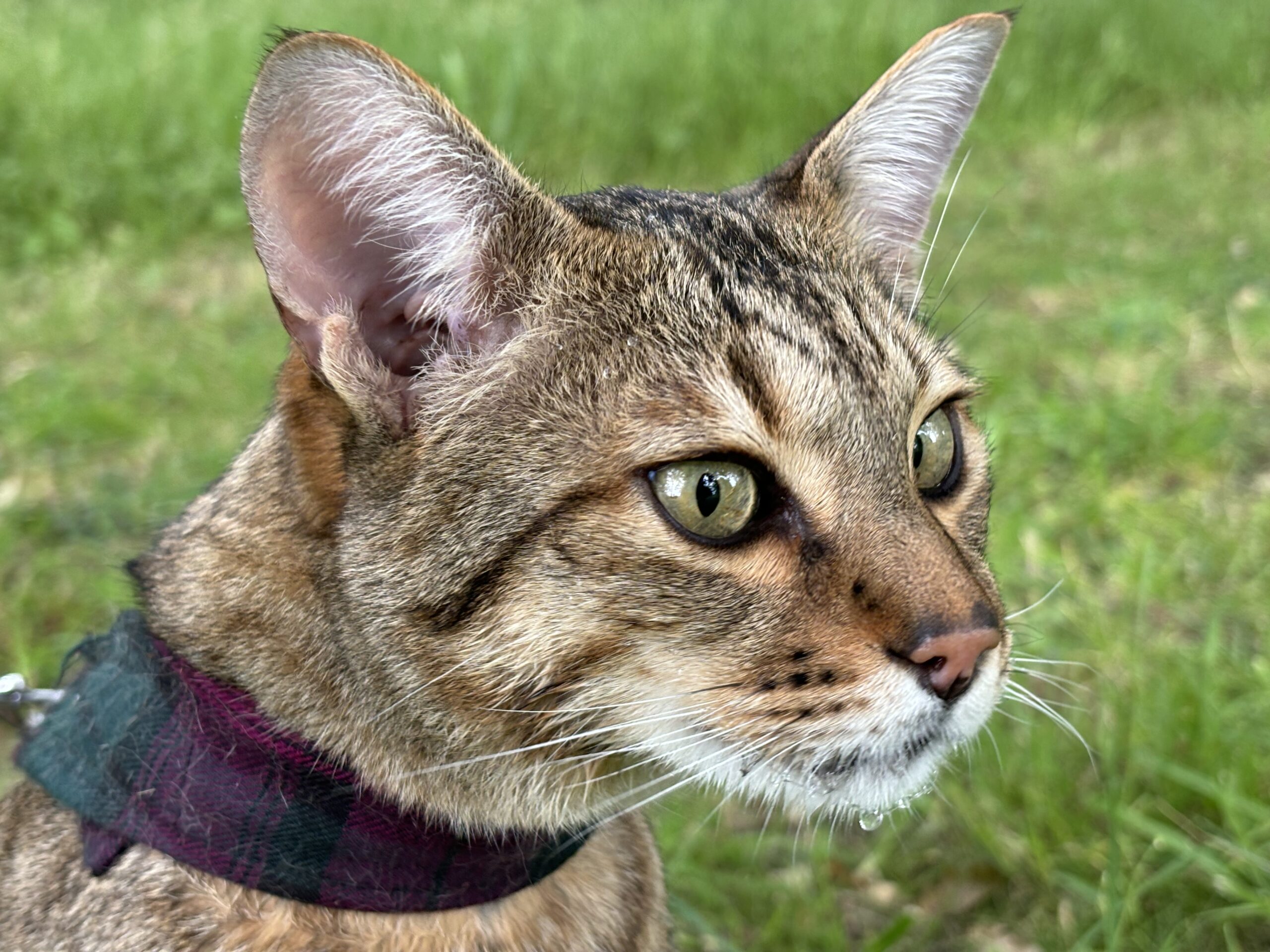
Pushkin is an F-generation Savannah — the breathtaking appearance of his wild ancestry, paired with a temperament that fits comfortably into everyday domestic life.
Appearance and Size
A long, lean body with unusually long legs, a small head with large upright ears, and bold "tear stripe" markings running from the eyes down the muzzle — inherited directly from the Serval. Every Savannah's spot pattern is unique, like a fingerprint. Adult males typically weigh 7–11kg, adult females 4–7kg; the breed holds the Guinness World Record for tallest domestic cat.
Personality: Dog-Like Loyalty
Savannahs follow their people from room to room, greet visitors at the door, play fetch as a genuine preferred activity, and can be trained to walk on a harness and lead. They're also highly intelligent — solving puzzle feeders in minutes and remembering exactly which drawer holds the treats.
Savannah Cats and Water
Unlike most domestic cats, Savannahs are genuinely fascinated by water — a trait inherited from the Serval's wetland habitat. They'll dip a paw in a glass, sit at the edge of a running shower, or play with a garden hose with real delight.
A Real Commitment
Savannah cats live 12–20 years and need daily interaction, real stimulation, and space. They're not suited to being left alone for long periods. What they give back is remarkable — a bond closer to a loyal dog than a typical cat.
This guide reflects general breed knowledge. For the real, day-to-day experience behind it — his routines, his catio, his harness walks — visit Life with Pushkin.
More guides — behaviour, nutrition, training, and travel with a Savannah cat — are being added regularly.
[/et_pb_text][/et_pb_column][/et_pb_row][/et_pb_section]